
Accueil › Motifs de consultation › Stress, anxiété et fatigue
Consultation reasons · Geneva & Veyrier
Stress, anxiety, fatigue:
when the body can no longer recover
Chronic stress, persistent anxiety and profound fatigue are among the most common reasons for seeking consultation today. Traditional Chinese Medicine offers a precise understanding of these conditions and a way of treating them at a deeper level, rather than just on the surface.
RME & ASCA accredited · Reimbursement may be available through supplementary insurance
Identify the signals
When stress ceases to be a temporary response and becomes a chronic condition
The body knows how to cope with occasional stress. What wears us down is a state of constant alertness, when the alarm system no longer switches off.
Stress is not just a psychological experience: it triggers a cascade of physiological responses. The nervous system switches to ‘survival’ mode: elevated cortisol, a rapid heart rate, and slowed digestion. Occasionally, this is appropriate. Chronically, it is exhausting.
In Chinese medicine, chronic stress corresponds to a stagnation of the Liver’s Qi; the energy that should flow freely becomes blocked, creating tension, rising and dispersing in a disorderly manner. This condition produces symptoms that Western medicine often treats separately, even though they share a common source.
Common signs
—
Anxiety, rumination, underlying nervousness that is difficult to shake off
—
Persistent fatigue despite rest, non-restorative sleep
—
Sleep disorders, difficulty falling asleep, waking up around 3 am
—
Muscle tension, chest tightness, a knot in the stomach
—
Functional digestive disorders, bloating, irregular bowel movements, disturbed appetite
—
Reduced concentration, brain fog, loss of motivation
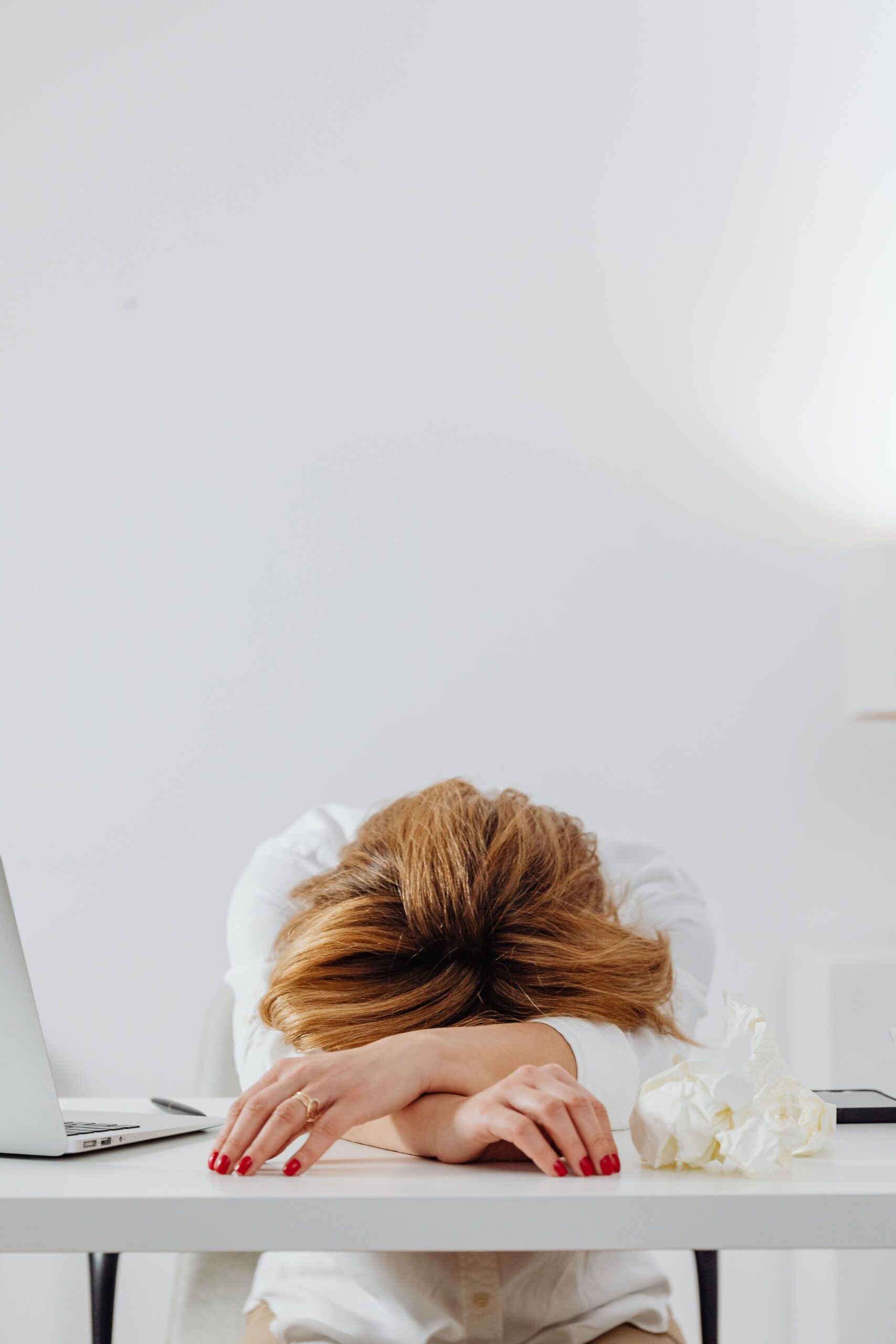
Stress & menopause
Stress & the menopause
Anxiety, fatigue and sleep disturbances are also common symptoms of perimenopause. If you are going through this phase, these symptoms often have a hormonal cause, which acupuncture addresses directly.
How it works
What acupuncture actually does to the nervous system
Acupuncture does not simply ‘relax’ you. It sends specific signals to the nervous system that alter the way the body manages stress.
Autonomic nervous system
Acupuncture appears to help the body gradually move away from a state of constant alertness and return to a mode of functioning more conducive to rest and recovery. Studies show that this effect is often accompanied by an improvement in heart rate variability, a recognised marker of the balance of the autonomic nervous system.
Hypothalamic-pituitary axis
Studies suggest that acupuncture may influence the stress response axis (hypothalamic-pituitary-adrenal axis), particularly by modulating cortisol secretion. Whilst certain physiological changes may be observed after a single session, clinical benefits tend to develop gradually over the course of a treatment programme comprising several sessions.
The amygdala and emotional regulation
Studies using functional MRI suggest that acupuncture is associated with changes in the activity and connectivity of brain regions involved in the regulation of emotions, notably the amygdala and the hippocampus. These regions play an important role in stress responses, anxiety and emotional memory.
what happens during the session
Most patients describe a feeling of deep relaxation from the very first session, sometimes the first time in a long while that they have truly ‘switched off’. Some fall asleep. Many report improved sleep from the very next night. This is not a placebo effect: it is the nervous system’s response to specific stimulation.
chroniC Fatigue
What happens when rest is no longer enough to recover
Chronic fatigue is not a lack of willpower. It is a recovery system that is no longer functioning properly.
Fatigue that persists despite sleep is different from ordinary fatigue. It is often accompanied by mental fog, increased susceptibility to infections, and difficulty feeling pleasure or enthusiasm. This is a sign that the body has been drawing on its deep reserves for too long.
In Chinese medicine, this condition is often associated with an depletion of the Jing of the Kidneys – the fundamental energy reserves inherited and accumulated over the course of a lifetime. These reserves are drawn upon when all other resources are exhausted. Restoring them takes time and requires a different approach: it is not a matter of ‘stimulating’, but of nourishing, protecting and gradually rebuilding.
Moxibustion is often combined with acupuncture in such cases; the gentle, penetrating heat applied to specific points helps to restore vitality from deep within, without overstimulating an already exhausted body.
Frequently Asked Questions
What our patients ask us
Can acupuncture really help with stress and anxiety?
Yes. Brain imaging studies show that acupuncture modulates activity in the amygdala and the hippocampus, two key areas involved in stress regulation. It also promotes activation of the parasympathetic nervous system – the ‘rest and recovery’ system – and can influence biological markers of stress. These effects develop gradually over several sessions.
What is the difference between normal tiredness and chronic fatigue?
Normal fatigue disappears with rest. Chronic fatigue persists despite sleep, and is often accompanied by brain fog, increased susceptibility to infections and a profound feeling of heaviness. In Chinese medicine, it reflects an exhaustion of deep energy reserves that simple rest is not enough to restore. Treatment aims to rebuild these reserves, not merely to provide temporary stimulation.
How many sessions are needed?
For reactive stress or fatigue (linked to a specific difficult period), 4 to 6 sessions often yield noticeable results. For chronic exhaustion that has persisted for months or years, a course of 8 to 12 sessions over 2 to 3 months is recommended. Most patients report improved sleep and a sense of relaxation from the very first sessions.
Stress, fatigue and the menopause: is there a link?
Yes, and it is often underestimated. The hormonal fluctuations of perimenopause directly disrupt the autonomic nervous system, causing anxiety, irritability, chronic fatigue and sleep disturbances. In Chinese medicine, these symptoms often share the same root cause: an imbalance of Kidney Yin. Acupuncture targets this condition specifically. Find out more about our approach to the menopause →
Is acupuncture for stress covered by health insurance in Switzerland?
Yes, by supplementary insurance policies, depending on the contract, and provided the practitioner is recognised by RME and ASCA. Nour Chaabane holds both these accreditations. The amount reimbursed depends on your policy, please check with your therapist or insurer.
Can I carry on working as normal during treatment?
Absolutely. Sessions last 45 to 60 minutes and do not require any specific recovery time. Many patients come during their lunch break or after work. It is simply advisable to avoid intense physical activity immediately afterwards. Some patients feel slightly drowsy after the session, this is a good sign: the nervous system is starting to wind down.
Rates & Reimbursements
Sessions can be reimbursed by Swiss supplementary health insurance schemes. The practice is recognised by RME & ASCA.
You’ve been carrying this burden for far too long.
It’s time to do things differently.
First appointment available within 48 hours in Geneva or Veyrier. A personalised consultation, with no standardised approach.
Accredited by RME & ASCA · 76 rue de Carouge, Geneva & 97 Ch. des Rasses, Veyrier