Home › Chinese Medicine
Traditional Chinese Medicine · Geneva & Veyrier
A medicine with deep roots,
increasingly well documented
Traditional Chinese medicine doesn’t just treat a symptom: it looks for why it is there and how to treat it lastingly. At the practice, we offer acupuncture, TuiNa massage, moxibustion, GuaSha and cupping. Each session combines the techniques best suited to your clinical picture on the day.
RME & ASCA accredited · Covered by supplementary insurance · First appointment within 48h
Understanding TCM
Treating the cause, not masking the symptom
A painkiller brings relief. Chinese medicine looks for the source of the imbalance and works on that.
Traditional Chinese medicine (TCM) is a medical approach with deep roots. Its founding texts, including the Huangdi Neijing (the Yellow Emperor’s Inner Classic), date back at least to the Han period (206 BC), and its practices are older still. It grew out of a long tradition of observation: generations of practitioners carefully recorded what happens in the body, the seasons and natural cycles, and the correspondences between them.
This way of thinking rests on one founding idea: the human body is a microcosm that reflects the laws of the natural world. The same forces that govern the seasons, rivers and the cycle of day and night also shape our physiology. Cold contracts, heat activates, damp slows things down, in nature as in the body’s tissues. The organs resonate with seasons, flavours and emotions: the Liver with spring and anger; the Kidneys with winter and fear; the Heart with summer and joy. This is not poetry. It is a system of correspondences built through repeated observation and codified to guide diagnosis and treatment.
From this observation came a holistic view of the body: the physical, emotional and functional dimensions are not separate. A sleep disorder may stem from an overloaded Liver. Chronic pain may be linked to depleted Kidneys. A digestive problem may reflect a worry that has settled in the Spleen. The practitioner doesn’t try to switch off the symptom, but to understand what it reveals about the whole system.

From this observation came a holistic view of the body: the physical, emotional and functional dimensions are not separate. A sleep disorder may stem from an overloaded Liver. Chronic pain may be linked to depleted Kidneys. A digestive problem may reflect a worry that has settled in the Spleen. The practitioner doesn’t try to switch off the symptom, but to understand what it reveals about the whole system.
In 2022, the WHO brought ICD-11 into effect, which for the first time includes a chapter dedicated to traditional medicine syndromes and practices, including TCM. TCM now has a codified repertoire recognised in international medical language, and contemporary scientific research is beginning to document the physiological mechanisms underlying what centuries of clinical observation had already described.
The network that connects everything
The meridians: why the practice is called Santé & Méridiens
In Chinese medicine, the meridians are not a detail: they are the key to reading the entire body.
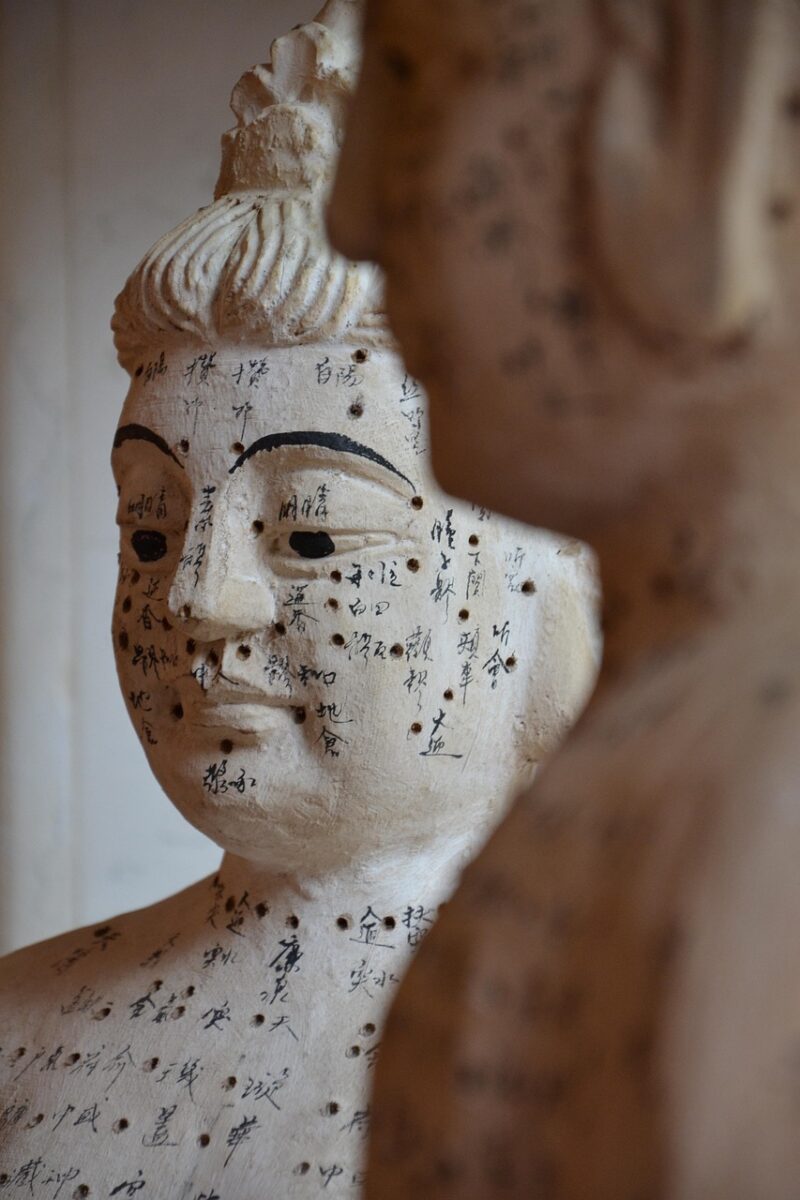
Meridians are the pathways described by Chinese medicine along which Qi, the body’s functional energy, flows. There are twelve main meridians, each connected to an organ: Lung, Heart, Liver, Spleen, Kidney, Gallbladder… Together they form a continuous network running through the body from head to toe.
When circulation in the meridians flows freely, the body adapts, recovers and maintains its balance. A blockage or slowdown makes itself felt: pain, fatigue, insomnia, digestive trouble, all signs that something deep down is no longer flowing well.
Acupuncture, TuiNa and moxibustion always work on the meridians, stimulating precise points to revive, calm or rebalance their flow. It is this logic of network, interdependence and fluidity that gives the practice its name: Santé & Méridiens which translates into Health & Meridians.
Did you know?
Neuroscience research has found that acupuncture points, located along the meridians, often correspond to areas with a high density of nerve endings and connective tissue. When stimulated, they trigger measurable responses in the central nervous system.
Ready to try something different?
Give us a call before booking if you have any questions. We’ll tell you honestly whether we can help. No jargon, no commitment.
✓ RME & ASCA accredited · 76 rue de Carouge, Geneva & 97 chemin des Rasses, Veyrier